

Rural Industrialism
Localised industries may be just help the rural to thrive

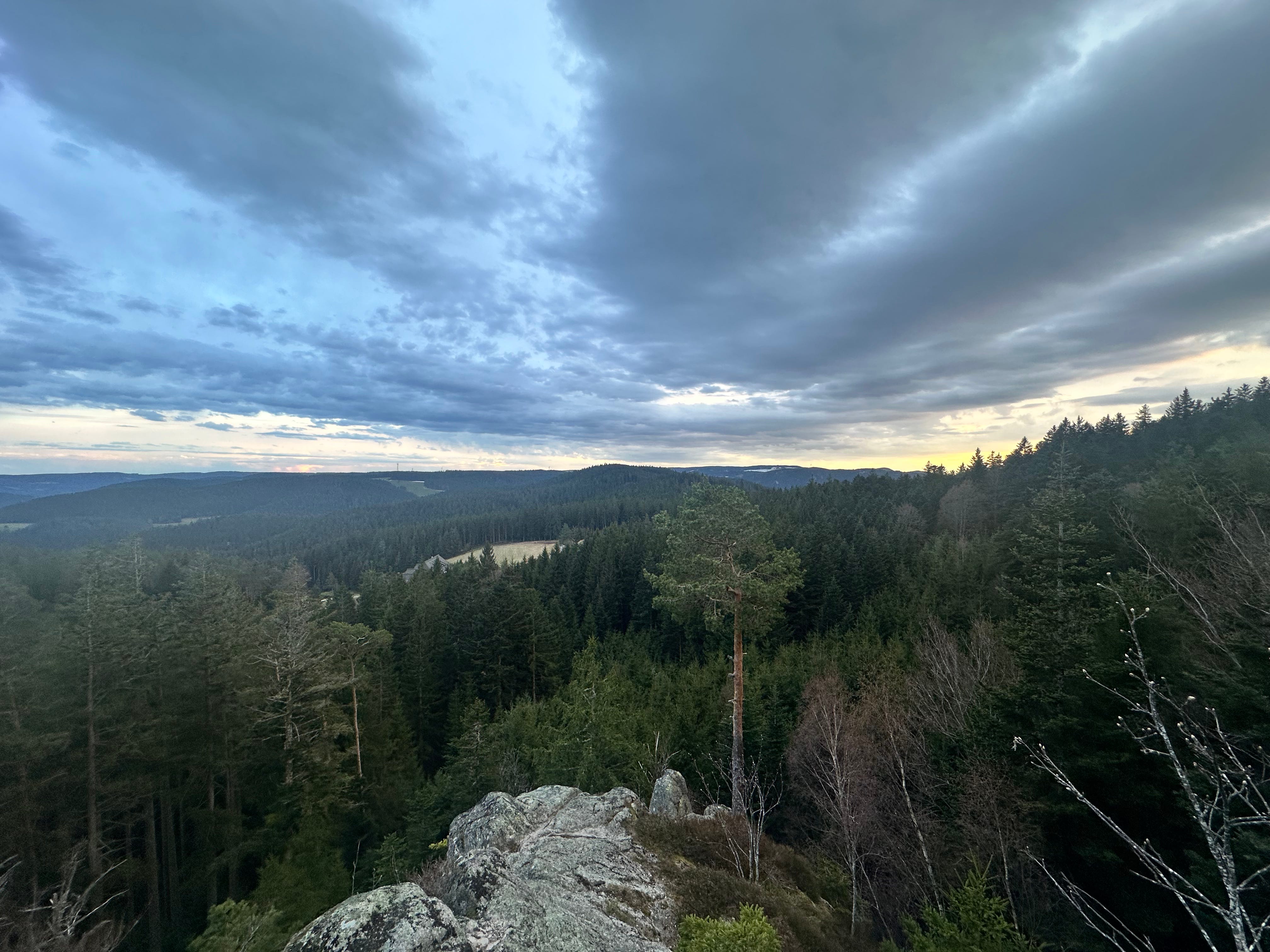
Following a recent trip to the German Black Forest, I am pleased to report the region well and truly lives up to its name. Dense stands of dark-green coniferous trees stretch as far as the eye can see in all directions covering every hill and mountain in waves of darkness. And when the sun sets behind the peaks, the deep valley forests turn into very black places indeed; places where fairytale villains lurk in the shadows of one’s imagination and where getting lost (like I did) is the exact opposite of what a wise person would do.
Everywhere one looks in the Schwarzwald (to use its German name) are the tell-tale signs that this is a deeply traditional and storied place. The deep dark forests along with ancient castles that stand above most of the towns attract millions of visitors to the region every year, some of whom hope to step into the fairytales of their childhood to rekindle that innate sense of wonder and mystery that adults all to easily lose. Others, like me, come to experience folklore, tradition, and nature at its finest. Few leave disappointed, and I was not one of them. But the forests, castles, and traditions are not the sole causes of what makes the Schwarzwald special; the fact that the entire region is eminently rural also plays its integral role.
Yes, the Schwarzwald has its places, such as the larger towns, which feel urban, but by far the most common settlements are small towns, villages, and isolated farmsteads. As to be expected in a region so abundantly provisioned with timber, most of the rural houses are wooden ranging from the traditional Black Forest farmhouses1 to the colourful half-timbered ‘Fachwerkhäuser’ that everybody thinks of when they imagine “Germany”. And in every town and village, the remnants of old traditions — cuckoo clocks, Tracht, Bollenhüte — and are prolific and displayed with pride. The Schwarzwald is thus not just rural; it is delightfully and proudly rural.
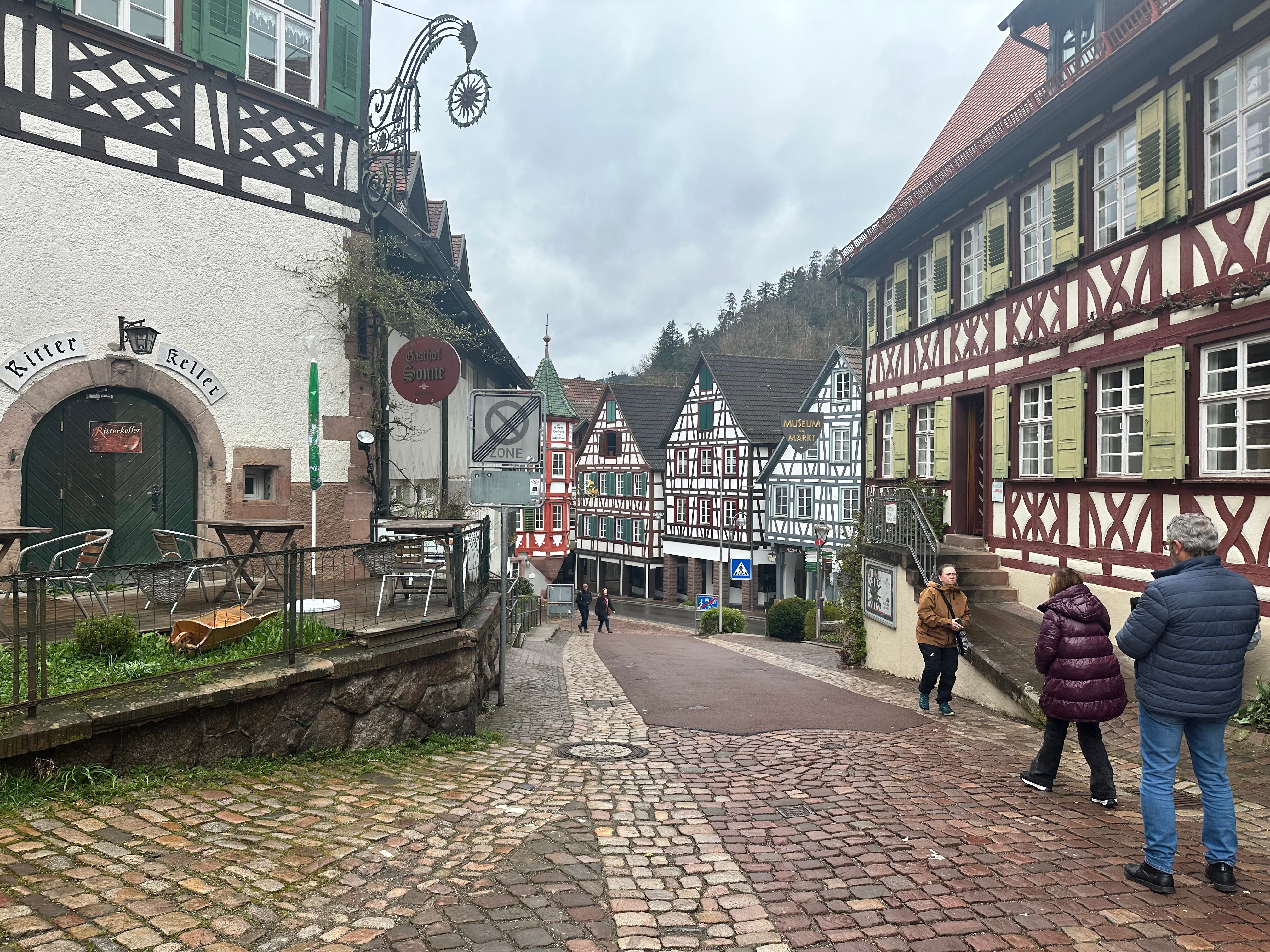
Compared with some other rural localities which I have visited, it didn’t take me long to recognise that the Schwarzwald is thriving. In this regard it proves even in our urban-centric age, the words ‘rural’ and ‘decline’ need not be synonymous. I saw no shuttered-up shops, very few dilapidated buildings, and the villages and towns were anything but quiet and empty (apart from on the Easter bank holidays when practically the whole of Germany shuts down). Instead, the towns bustled with activity and independent shops (the premier indicator of a thriving rural community) proudly displayed their German-made wares on many street corners. Most notably, almost all of the ubiquitous Fachwerk houses had vibrant paintwork and were well-cared for, indicating that their inhabitants were proud of where they lived and were willing to expend the necessary effort required to “keep up appearances.”
I was delighted. I know of many rural places suffering from what looks like terminal decline and have read about towns and villages which have lost their unique character like an old Edwardian house stripped of its treasured furnishings and beautiful wallpaper. The Schwarzwald proves decline and desecration need not be the determined fate for our rural places. The pertinent questions for the ruralist to consider, therefore, are “how has the Schwarzwald managed to keep its beauty, traditions, and character alive? and “how has it kept that old foe, ‘decline’, at bay?”
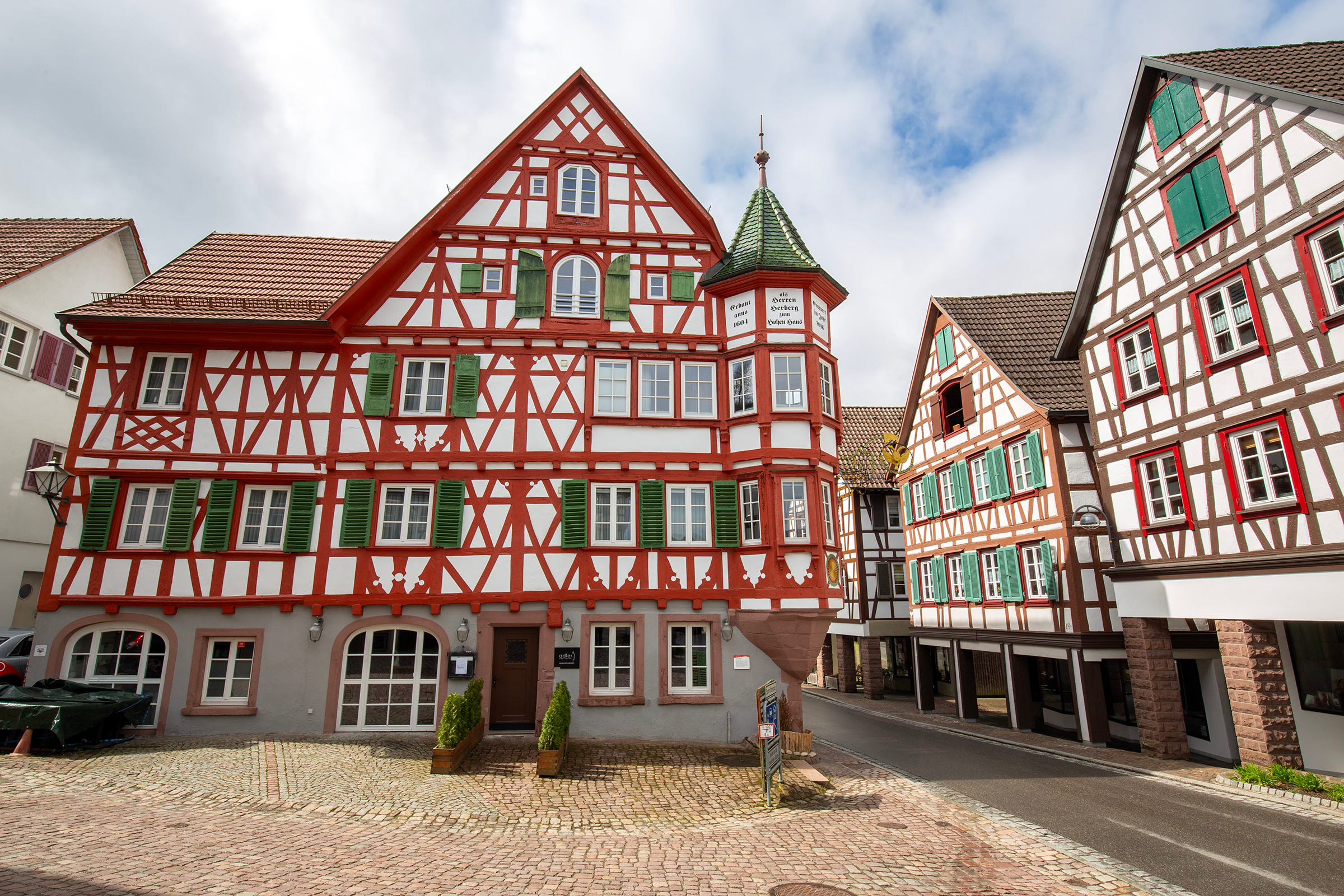
As I pondered these questions whilst wandering the Fachwerk-lined streets, I came to a conclusion which caused the agrarian in me some degree of discomfort: the Schwarzwald was thriving because of industrialism. Yes, tourism and tradition provide some of the heavy lifting in propping up the local economy, but from what I could see, it was industry — both heavy and light — that really kept the region’s life-blood pumping. Industry, the very factor which I have countless times pinned the blame on for causing the death of the rural, is actually keeping the Schwarzwald alive. And more than just alive, even thriving.
Before I am forced to eat a giant helping of humble pie, I wish to partly defend my anti-industrialism record. I have witnessed the destructiveness of industrialism first hand: how it has outcompeted independent businesses, imposed its own standards and rules on local communities like a domineering landlord, polluted waterways, ripped open hillsides, and abused the land like a squatter expecting others to clean up its own mess. I have read in George Orwell’s explorations of Northern England just how ugly, dirty, and dangerous the industrialism of the last two centuries was and how soul destroying many Northern industrial towns were to live in, not to mention how often the life of many of their inhabitants came to a premature end.2 To this day, one only needs to look at the industrial regions of China and Russia to see that much of what passes for modern industrialism rushes headlong into these same industrial sins. No one in the West wishes to return to this. Industrialism can be dark and Satanic. It can be evil. It can be “the cause of death” on the death certificate of the Good.
But what I have come to accept — and have now witnessed firsthand — is not all industries act in such a desecrating and arrogant manner. There are plenty which are sensitive and sustainable in their use of their local areas and its resources; others incorporate and keep alive local traditions and practices in their production methods and designs. Most importantly, industrial businesses provide that essential thing without which no rural area, irrespective of how beautiful and traditional it is, can survive: jobs. Good industry, like good farming, provides a lifeline for rural residents (especially young folk) who wish to remain rooted in their place and resist what is often seen as the inevitable pull of well-paying urban jobs. A culture of rootedness is one of the greatest needs for our rural places; if good industry can help foster this then it gets my blessing.
So, contrary to how I have argued in the past, I now see that both desecrating, ‘bad industries’ and benevolent, ‘good industries’ exist in this complex and diverse world. From what I could observe, the small and medium sized family-owned businesses that dominate the region (the famed German Mittlestand), fit firmly in the latter category. We need more rural regions to follow the Schwarzwald’s example if thriving rural places are to become the norm. It will be worth our while to consider some of the principles and characteristics of these Schwarzwald Mittlestand industries that make them a blessing and not a curse to this special region.
First and foremost, many of the industries and businesses made productive and sustainable use of the resource the region is well-endowed with: wood. Almost every village and town no matter how small was home to at least one of the following: sawmills, carpenters, timber builders, timber merchants, and firewood makers and some of these businesses utilised traditional practices in their methods and designs. Making wise and sustainable use of what is naturally and locally abundant is the key to good industrial practice and makes rational sense.
Further, the entire forestry industry that provisioned these businesses with good-quality timber appeared to be run in an ecologically sustainable manner. The Germans are renowned for being both pioneers and experts in forest management and I could see why. There were no ghastly clear cuts to be found in the Schwarzwald; instead, selective logging was practiced whereby the best logs for industry were harvested in rotation and the rest of the surrounding trees were left standing. This kind of forestry has one major benefit: it keeps the forest a forest and not as a landscape of annihilation (those who have seen a clear cut will know what I mean). Thus, the forest continues to provide a home to the entire community of creation at the same time as providing the lifeblood for the surrounding economy. This is creation and industry working together — like they were always designed to.
This emphasis on true sustainability, in contrast to the insipid greenwashing and tokenism that almost every modern corporation under the sun now loves to proclaim, is one of the most effective ways good industrialism can support the rural. Most rural economies are highly dependent on nature; it provides the raw materials they harvest and process and its natural beauty attracts (and brings back) tourists who flood the region with much needed revenue. The most vital thing, therefore, for rural places is for their natural areas to remain healthy, resilient, and beautiful. If nature is sick and dying, so too will the local economy. All stakeholders in rural lands have an incentive, and more so a responsibility, for maintaining the health of the local natural places through good practice, thrift, and restraint, alongside the formulation of carefully designed laws, regulations, and informal customs. They will pay a costly penalty if they do not.
Forestry and wood-based businesses were not the only industries present in the Schwarzwald.3 So too were a whole range of other Mittlestand industries: precision manufacturers, food processors, and glassworks to name just a few. Perhaps most surprising were the presence of several headquarters of large and well-respected multi-national firms which remained rooted to the hometown of their founders. In the small town of Hornberg (population 4,154) where I stayed, Duravit, a large and respected bathroom ceramics manufacturer have their headquarters, complete with world’s biggest toilet cistern in their wall; and in nearby Schiltach, Hansgrohe4 had their international headquarters. This rather warmed my localist heart that these big and impressive businesses would choose to remain local and true to their roots. Perhaps there really is hope for industry after all — as long as we follow the Germans.
The presence of these multi-nationals highlight another feature of good industrialism that can bless our rural places: rootedness. Apart from ecological desecration, nothing is as damaging to the rural economy as businesses that decide to uproot and relocate. They take away with them jobs and opportunities, leaving rural folk — who may not the means to move or the desire to leave — bereft of opportunities and income. In such a scenario, a spiral of decline can all to easily set in, such as which has happened to countless coastal fishing villages with the closure of auction marts and fish processing facilities.
Having large (or small) businesses that are proud of their heritage and local place and are whom are willing to stay rooted and invest in the local area, gives rural folk the stability, certainty, and incomes they need to thrive, as well as support for local infrastructure, local authority service provision. What’s more, it is common knowledge that big businesses love to show that they are benevolent and good for the community: their logos plaster the sponsorship pages of many events and festivals for instance. Through, then, these sponsorship, grants, and charitable actions, businesses can help keep local traditions and customs alive, which is a wonderful use of profits in my humble opinion.
The other major advantage of having businesses rooted and proud of their place is this keeps them accountable. If they cause a mess and/or destruction through pollution or carelessness then they have to live with the consequences and will feel the wrath of the locals. Many of these businesses still bear the name of their founders or have brands which they are immensely proud of. When the family name or brand is caught up in scandal or controversy, the incentive to rectify this and recover good standing is going to be very strong indeed. Such an incentive does not, however, exist with large or multi-national companies which have come into the region from the outside. They may only care about potential financial costs and try and get away with as much as they can. They also know that they can always uproot and leave if the pressure gets too hot or the problems too difficult; the place means little to them anyway.
There was, however, one thing that blotted the Schwarzwald industry’s cover book and caused me a great deal of consternation. This concerned just how few (if any) of the very prominent buildings (often the headquarters) of these famous firms made use of the natural resource the region is well-endowed with. Instead, they made use of those materials of modernism that have taken over the world: plastics, steel, and concrete. These buildings would be boring buildings to look at in a city; in traditional towns and villages full of beautiful vernacular buildings, they were hideous eyesores sticking out like a boil on a forehead.
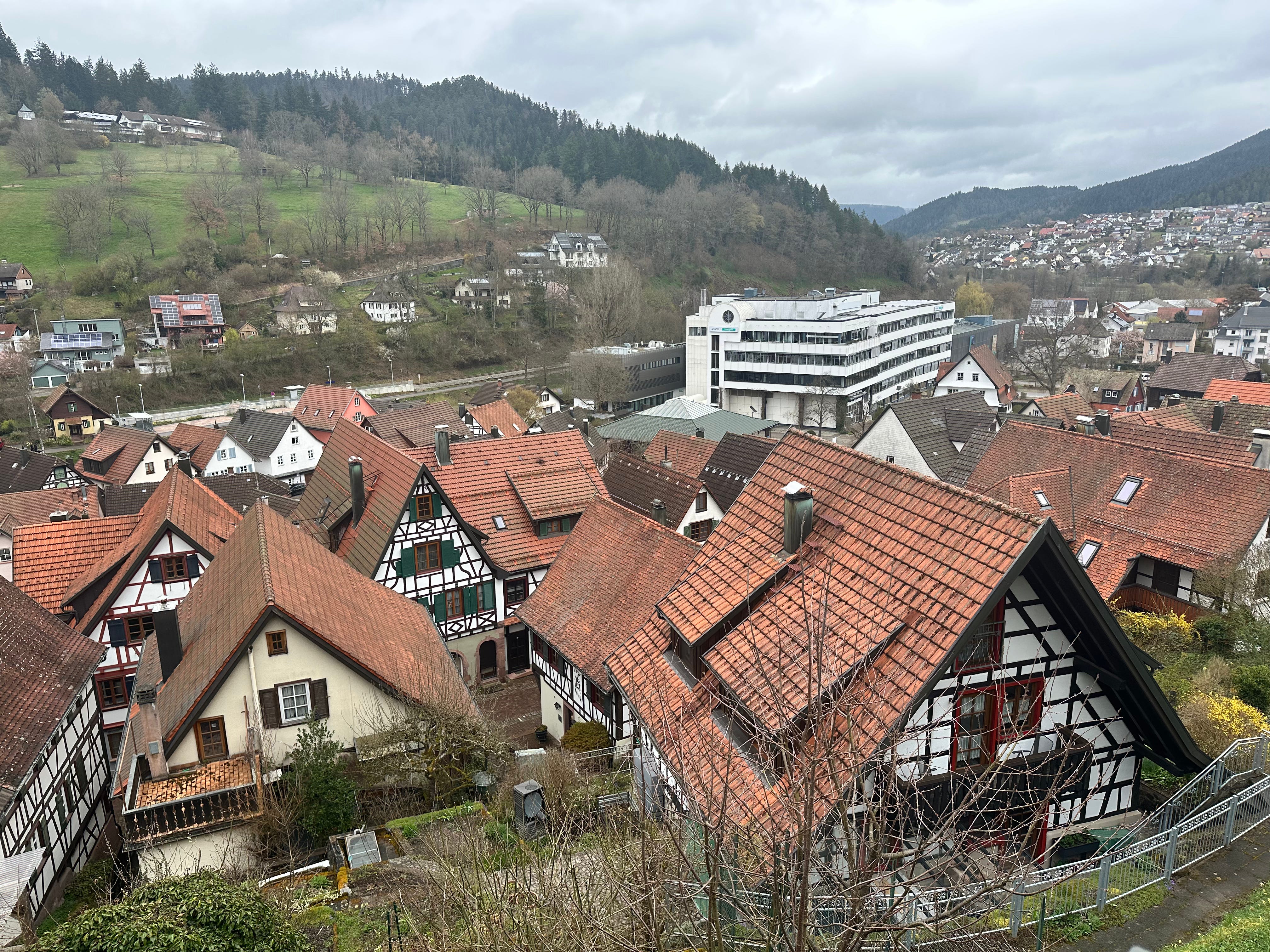
What frustrated me the most is that it wouldn’t have taken much to blend these buildings into their surroundings by incorporating some Fachwerk for instance, or by using more wood in their construction. Simple and sympathetic design features can go along way in keeping the rural image consistent and coherent, not to mention beautiful. Big buildings and headquarters can coexist in the traditional rural, they just need to be sensitively designed. Otherwise, they stand rather arrogantly in their places, imposing the aesthetics of modernism and industrialism upon the beauty of the rural — the very place these aesthetics do not belong.
These businesses are obviously proud to be founded here, and it is highly commendable that they have resisted the centripetal pull of the city and are instead supplying employment and investment to the rural communities. It is just a great shame that they don’t seem to care — or, to give them the benefit of the doubt, don’t seem to notice — just how much they spoil the aesthetics of this special place. Insensitive, ugly architecture is a modern plague in both urban and rural spaces; it is long past time that the free-reign given to modernist architects was taken away.
That being said, this aesthetic misdemeanour was the only major critique I had for the Schwarzwald’s industries. On the whole, the industrial-rural relationship was one of mutual benefit, evidence indeed that the rural can be supported by industry and not just preyed or parasitised by it. When businesses are rooted and proud of where they are from; when they sustainably use and manage local resources and provide locals with well-paying secure jobs; when they participate in local traditions and heritage and fund local infrastructure and community projects; when they create well-made products that bring the region fame and renown; and when they adhere to local aesthetic standards, then industry can be an immense blessing to the rural.
The above list may sound like a tall order for industrialism. It will mean forsaking and rejecting much of what passes for modern industrial orthodoxy, and may mean that profits are not as high as they could be or what distant shareholders demand. But if we wish to see our rural areas thrive, then good industries are what our rural places desperately need. The Schwarzwald proves good industrialism is possible and shows how to do it; may all other rural regions go and do likewise.
I don’t like doing this (as an Englishman who naturally shirks from self-promotion), but if you enjoyed this piece, consider giving it a like (the heart button). I ask this as in the age of wretched algorithms, the more likes a piece receives the more widely distributed it is to new audiences. Which helps this writer a lot.
Huge wooden barn houses with thatched rooves. On one of them I observed three sizeable conifer trees growing on the roof!
Orwell is scathing in his description of Northern England’s industrial towns, painting a vivid picture of how disgusting, dirty, dangerous, and devoid of beauty they were. Particularly, in his opinion, Sheffield. See, Orwell, North and South.
Thus they avoided the “one-product economy” trap Wendell Berry warns localist economies to avoid.
A leading shower head manufacturer.
I think that, as you imply in the article, industry that is local, so has a stake in the place it is impacting, and is of a scale that restricts its impact, does indeed have significant positive potential. The deregulation of global capital and the promotion of large corporations ahead of small businesses unfortunately mean we have "shareholders' interests" driving decisions rather than local people's. The big money descends, exploits, extracts and moves on with no care at all for the landscapes or communities it leaves behind. Yet, our mainstream politicians seem to believe that this global growth mantra is inescapable whilst our populist politicians are these very wolves in sheep's clothing.
This substack re Distributism I think goes exactly where you were going and even points to W Germany as a model. https://nationaldistributistparty.substack.com/p/chesterton-belloc-and-the-distributist?r=4v9rk&utm_medium=ios
I am just leery that outside that specific apparently hard won context there is ever enough - patience? - tolerance for nuance? - (in Uk or USA) to get beyond the hardened reactionary extremes of ‘class warfare’ labels - ‘Billionaires Capitalist Big Business’, vs ‘Marxist Socialist Communist’ that anyone arguing for a ‘third way’ gets tarred & feathered with. I am skeptical that most modern ‘industrial’ entrepreneurs would embrace such cooperative or collective ownership arrangements. 🤷♂️